20-minute dinners: the reflexes that save your weeknights
It is 7:30 pm. The day has been long, everyone is hungry, and the mere thought of spending an hour at the stove makes you want to open a delivery app.
This is exactly where the nutritional balance of a week is decided. Not in grand principles: in the ability to put a real meal on the table in 20 minutes, without losing your nerves in the process.
Good news: it is a skill you can learn. It rests on three pillars: a pantry designed for speed, techniques that save real time, and template recipes you can adapt without thinking.
The express pantry: half the work
A 20-minute meal starts days earlier, at the grocery store. You just need to always have:
- Fast starches: fresh or thin pasta (spaghetti, penne), couscous (ready in 5 minutes), basmati rice, gnocchi, tortillas.
- Instant proteins: eggs, canned tuna and sardines, pre-cooked chickpeas and lentils, tofu, bacon bits or diced ham, chicken fillets in the freezer.
- No-peeling vegetables: plain frozen vegetables (spinach, broccoli, stir-fry mixes), cherry tomatoes, baby greens, canned tomatoes.
- Flavour boosters: garlic, onion, parmesan, soy sauce, curry, harissa, lemon, frozen herbs. They are what turn three ingredients into a real dish.
With this foundation, there is always a possible dinner at home, even a week after the last shop.
The techniques that genuinely save time
- Start the water and the oven before anything else. First move when entering the kitchen: the kettle or the pot of salted water, and the oven if needed. Everything else gets prepared while they heat.
- Cook in parallel, not in sequence. While the pasta cooks, the frying pan works. While the oven heats, you chop.
- Cut small. Diced courgette cooks in 5 minutes, thick slices in 15. Cutting size is the most underrated speed lever.
- Use the kettle. Water that hits the pot already boiling saves 5 minutes on every pasta or couscous dish.
- Embrace smart shortcuts: frozen vegetables, rinsed canned legumes, garlic paste. The goal on a Tuesday evening is to eat well, not to win a competition.
Five template recipes to adapt without thinking
More useful than precise recipes: structures you fill with what you have.
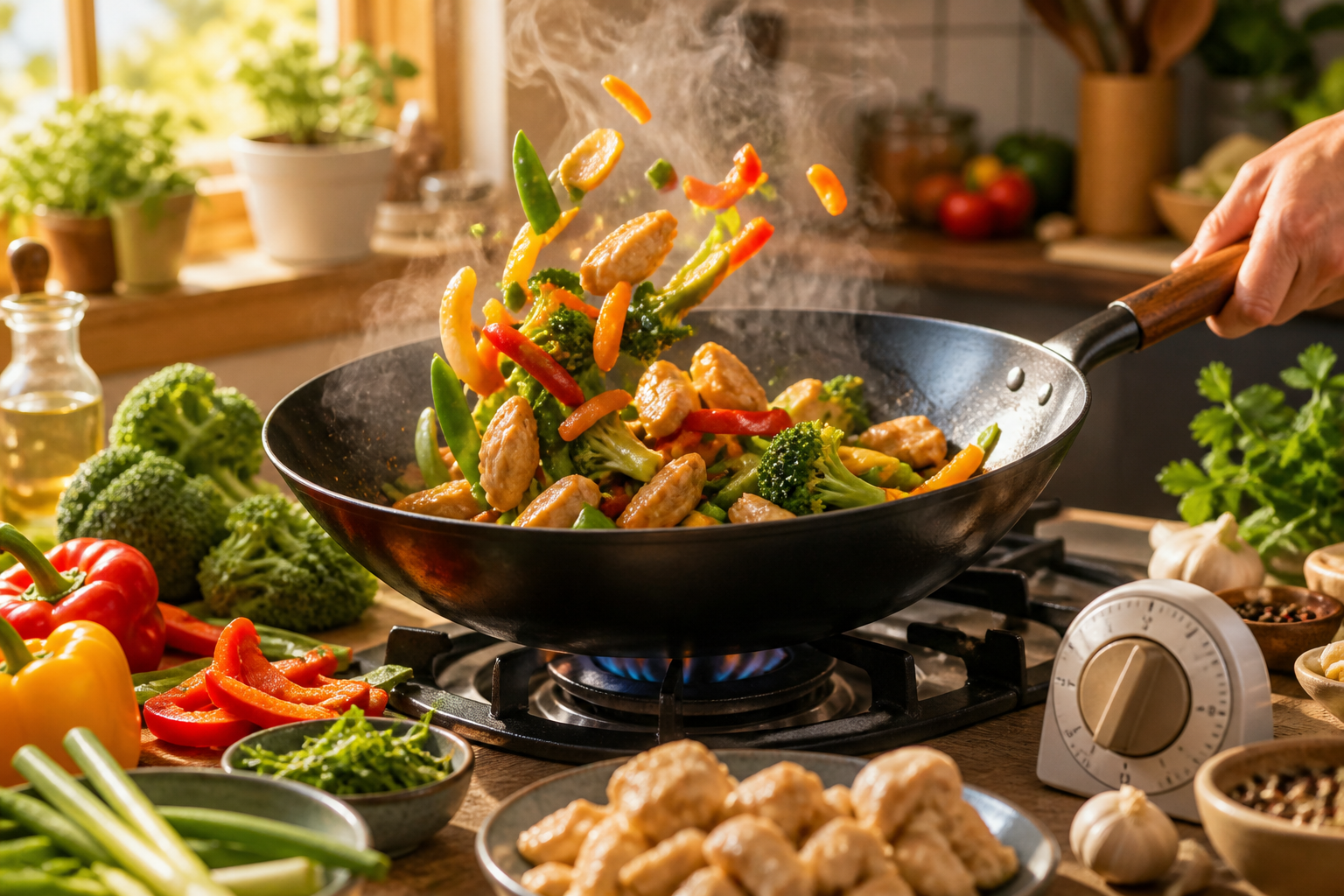
- The complete stir-fry: a base (rice, couscous) + a protein + a vegetable, sautéed with garlic and soy sauce or curry. Ready in 15 minutes.
- Pantry pasta: pasta + a smart can (tuna-tomato, sardines-lemon) + a green vegetable thrown into the pasta water 3 minutes before the end.
- The loaded omelette: 3 eggs per person + leftover vegetables + cheese, with a salad. The fastest rescue meal in the world: 10 minutes.
- The hot wrap: tortilla + protein + raw vegetables + sauce, folded and browned 2 minutes in a pan.
- The meal soup: frozen vegetables + stock + legumes, blended or not, with toasted bread and cheese. 20 minutes, maximum comfort.
The real secret: decide before you are hungry
All the techniques in the world will not save you from one problem: at 7:30 pm, a tired brain no longer wants to choose. The decision is what costs, more than the cooking.
The remedy is simple: know from the morning (or better, from Sunday) what will be cooked each evening. When the menu is already decided and the ingredients already there, the 20 minutes become a simple execution, almost relaxing.
That is the role of GustoPlan: a weekly menu adapted to your available time, where busy evenings get genuinely fast recipes, and the matching shopping list.
Conclusion
Cooking a real meal in 20 minutes is no feat. It is the sum of small decisions made in advance: a pantry that makes speed possible, cooking run in parallel, template recipes you master, and a menu decided before the fatigue hits.
Next time the delivery temptation shows up at 7:30 pm, remember: by the time the courier arrives, the stir-fry would already be on the table.
Want calmer weeknights?
GustoPlan builds menus that respect your time: quick recipes on busy evenings, and the shopping list ready before you even think about it.