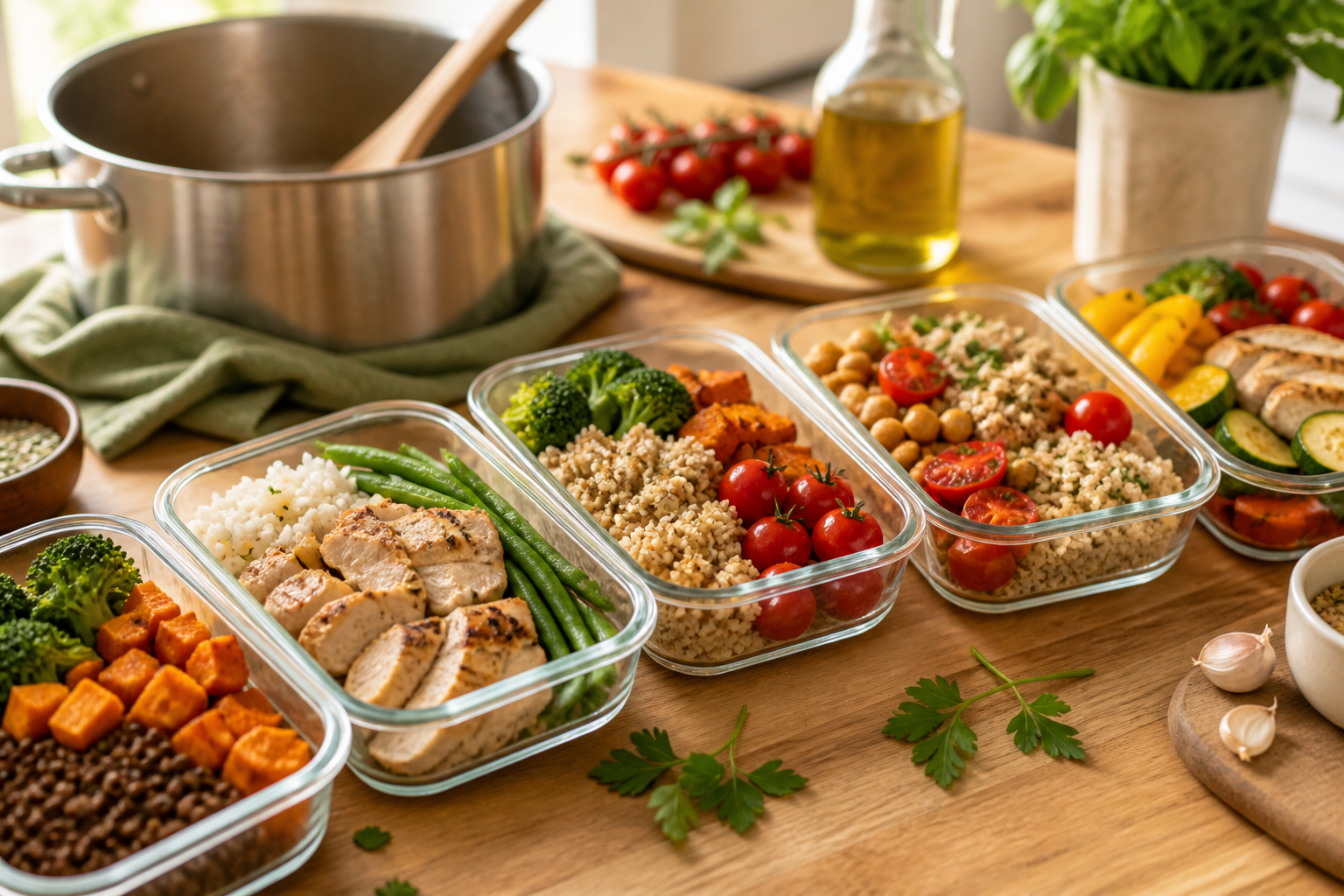
Batch cooking: the simple guide to getting started without losing your Sunday
The idea behind batch cooking fits in one sentence: cook several days' worth of meals in a single session. Two hours on Sunday, and weeknight dinners come down to reheating, assembling, enjoying.
On paper, it sounds great. In practice, many people try it one weekend, spend four hours in the kitchen, dirty every pan they own, and never do it again.
The good news: the principle is not the problem, the method is. Here is how to start gradually, without exhaustion and without endless dishes.
Start small: 3 meals, not 10
The classic beginner mistake is trying to prepare every meal of the week in the very first session. The result: an entire afternoon in the kitchen, and the feeling that batch cooking costs more than it gives back.
For a first attempt, aim lower:
- 3 dinners for the busiest evenings of the week,
- one neutral base in a larger quantity (rice, quinoa, roasted vegetables),
- and that's it.
An hour and a half is enough. You will already feel the difference on Tuesday evening, when dinner is ready in ten minutes. The desire to scale up will come naturally.
Choose recipes that age well
Not every dish survives three days in the fridge. Some actually improve with time, others turn sad.
Good candidates:
- simmered dishes: curry, chili, stews, ratatouille,
- soups and veloutés,
- cooked grains: rice, quinoa, bulgur,
- oven-roasted vegetables,
- legumes: lentils, chickpeas.
Best avoided as fully prepared meals:
- fried and breaded foods, which go soggy,
- pasta cooked in sauce, which swells,
- salads dressed in advance,
- cooked fish, which dries out quickly when reheated.
For those, prepare the components separately and assemble at the last minute.
Organise the session: oven and hob in parallel
The secret to a short session is to never leave a piece of equipment idle. While vegetables roast in the oven, a grain cooks in one pot and a stew simmers in another.
A typical two-hour session:
- Start the longest dish first (the stew).
- Put the vegetables in the oven to roast.
- Cook the grain of the week.
- While everything cooks, chop raw vegetables and prepare a sauce or two.
- Finish with what needs no cooking: portioning, cooling, labelling.
And one golden rule: do the dishes while things cook, not afterwards. A clean kitchen at the end of the session is what makes you want to do it again next week.
Store food properly: the part everyone neglects
Batch cooking does not forgive improvised storage. Three simple rules:
- Cool quickly: no more than two hours at room temperature before the fridge.
- 3 days in the fridge for most cooked dishes. Beyond that, freeze them on day one.
- Airtight glass containers: they go from fridge to oven or microwave, keep no odour or stain, and let you see what is left.
One detail that changes everything: write the contents and the date on every container. An unidentified dish at the back of the fridge always ends up in the bin.
Plan before you cook
A successful batch cooking session actually starts before the kitchen: with meal choices and a shopping list. This is where most people give up. Improvising your session at the store means buying too much, forgetting a key ingredient, and stretching the session.
That is exactly what a tool like GustoPlan is for: building your weekly menu around your tastes, budget and available time, then generating the matching shopping list, sorted by aisle. The cooking session becomes the simple execution of a ready-made plan.
Conclusion
Batch cooking is not an iron discipline reserved for the hyper-organised. It is a flexible tool you can adapt to your own pace: three dishes to start, recipes that keep well, a session built around parallel cooking, and careful storage.
Start small this weekend. If on Tuesday evening your dinner is ready in ten minutes, you will know it is worth continuing.
Want to make meal prep easier?
GustoPlan builds menus adapted to your household, your budget and your preferences, with a clear, ready-to-use shopping list.