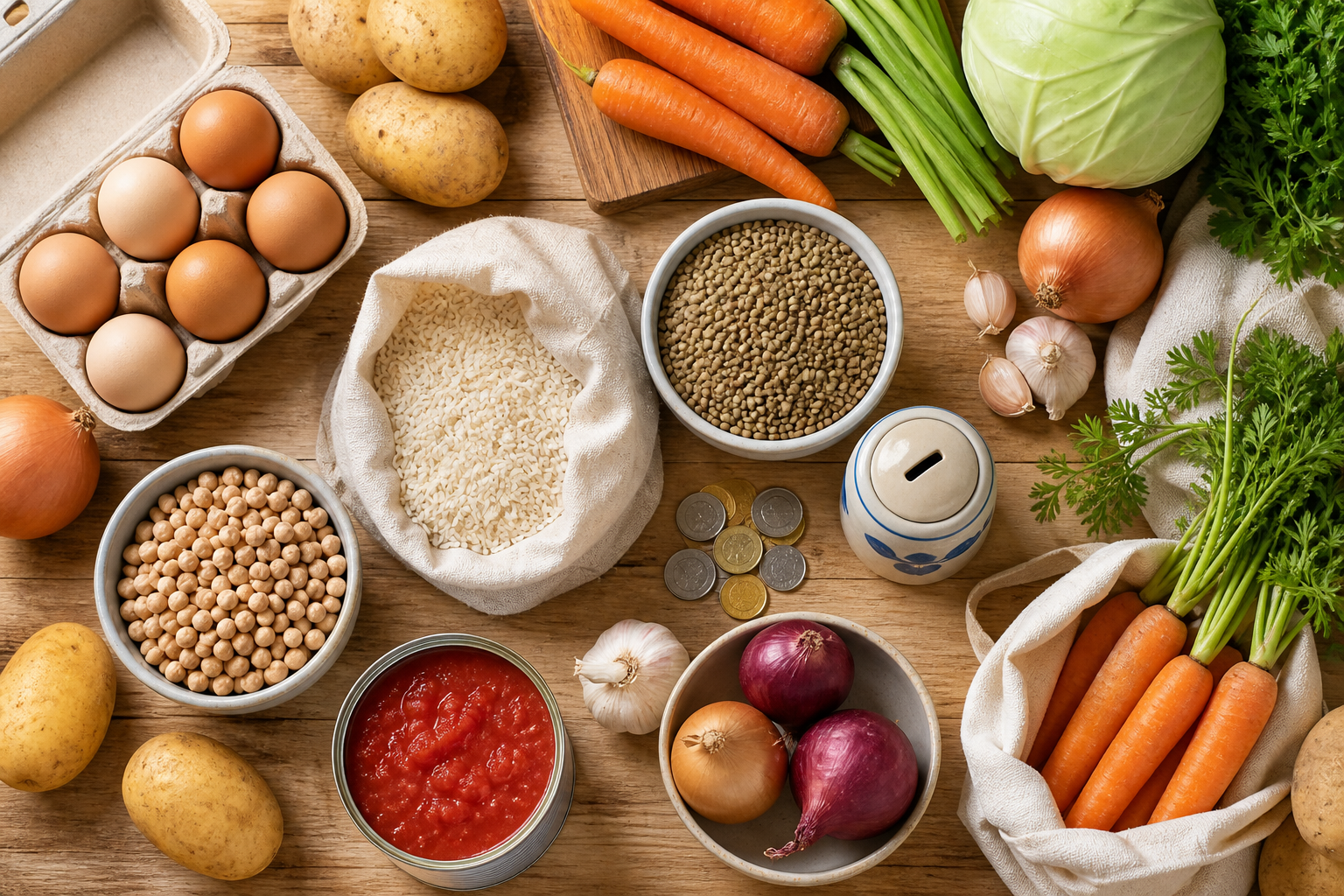
Eating balanced meals on a small budget: the method that actually works
"Healthy eating is all well and good, but it's expensive."
It is probably the most widespread myth about food. And it is easy to see why: between overpriced organic aisles and grocery bills that keep climbing, a balanced diet can feel like a luxury.
Yet the most nutritionally interesting foods are often among the cheapest in the store. The problem is not the price of balance: it is that we do not always know where to start. Here is a concrete method.
The foundation: cheap, nourishing staples
Some foods tick every box: inexpensive, filling, nutrient-dense, and easy to cook in countless variations.
- Legumes: lentils, chickpeas, dried beans. Around 3 euros per dry kilo, with unbeatable protein and fibre density.
- Eggs: the cheapest complete protein on the market, ready in ten minutes in a thousand ways.
- Whole grains: rice, pasta, semolina, oats. A few dozen cents per portion.
- Seasonal vegetables: up to twice as cheap in season as out of season.
- Plain frozen vegetables: spinach, green beans, peas. As nutritious as fresh, with no waste, often cheaper.
- Useful canned goods: tomatoes, mackerel, sardines, chickpeas. Healthy shortcuts for busy evenings.
A pantry built around these families lets you compose dozens of complete meals at under 2 euros per portion.
Protein: the first budget line to optimise
Meat is usually what drives up the bill. Without cutting it out, you can rebalance:
- Two to three vegetarian meals per week built on legumes and eggs: lentil dahl, chili sin carne, shakshuka, chickpea curry.
- Slow-cooking cuts rather than premium pieces: pork shoulder or chicken thighs cost far less than fillets, with more flavour in slow cooking.
- Canned oily fish: sardines and mackerel deliver the same omega-3s as much more expensive fresh fish.
At the store: four reflexes that make the difference
- Compare price per kilo, not the displayed price. It is the only honest comparison between two formats or two brands.
- Step down one tier: store brands are often produced in the same factories as big brands, for 20 to 30% less.
- Beware of processed food: the more prepared a product is, the higher its price per kilo. A ready-made gratin costs two to three times the price of its ingredients.
- Never shop hungry. It is not a myth: hunger fills the trolley with products that were never on the list.
Planning: the invisible saving
It is easy to forget, but the biggest source of budget waste is unplanned purchases and food thrown away. Planning the week's meals before shopping tackles both at once:
- the shopping list matches exactly the meals planned,
- every fresh product bought has a destination,
- quantities are calibrated to the number of people,
- and leftovers are anticipated rather than endured.
On the same budget, a household that plans eats better than a household that improvises. That is precisely what GustoPlan does: menus built around your target budget, and a shopping list that sticks to it.
A sample balanced day at a low price
- Morning: oats, milk, a banana, a handful of dried fruit.
- Lunch: lentil salad, grated carrots, a hard-boiled egg, homemade vinaigrette.
- Evening: chickpea curry with frozen spinach, brown rice.
Three complete meals, protein every time, plenty of fibre: all for an ingredient cost of a few euros per person.
Conclusion
Eating balanced meals on a small budget is not about filling your trolley with overpriced superfoods. It is about building meals on cheap, nourishing foundations, rebalancing your protein sources, adopting a few reflexes at the store, and above all planning so that nothing is bought or thrown away for nothing.
Want balanced menus that respect your budget?
GustoPlan composes your weekly menus around your budget, your tastes and your household, with a clear, no-frills shopping list.