Eating seasonally: the simple reflex for tastier, cheaper meals
Tomatoes in December. Strawberries in February. Courgettes in January.
Supermarket aisles have ended up erasing the seasons, and we have grown used to finding everything, all the time. The price of this permanent availability? Products that are less tasty, more expensive, and heavy on the environment.
Going back to the seasons is not a purist's constraint. It is probably the simplest and most profitable reflex you can adopt for your meals. Here is why, and above all how to get started without thinking about it.
Three good reasons to follow the seasons
Taste, first. A seasonal fruit or vegetable is picked closer to ripeness, having grown in its natural conditions. The difference is not subtle: an August tomato and a January tomato are two different products that happen to share a name.
Price, next. In peak season, supply is abundant and local: prices drop. The same courgette can double in price between July and December. Over a year of grocery shopping, following the seasons is a real saving, without changing your quantities.
Impact, finally. An out-of-season vegetable either grew in a heated greenhouse or crossed half the globe. In both cases, its carbon footprint has nothing in common with the same vegetable in season.
What each season does best
Spring is the season of freshness: asparagus, radishes, peas, spinach, strawberries. Meals get lighter naturally, with short cooking times and composed salads taking over.
Summer overflows with generosity: tomatoes, courgettes, aubergines, peppers, melons, apricots, peaches. It is the season when simple cooking is enough: a ratatouille, a tomato salad, a ripe fruit for dessert.
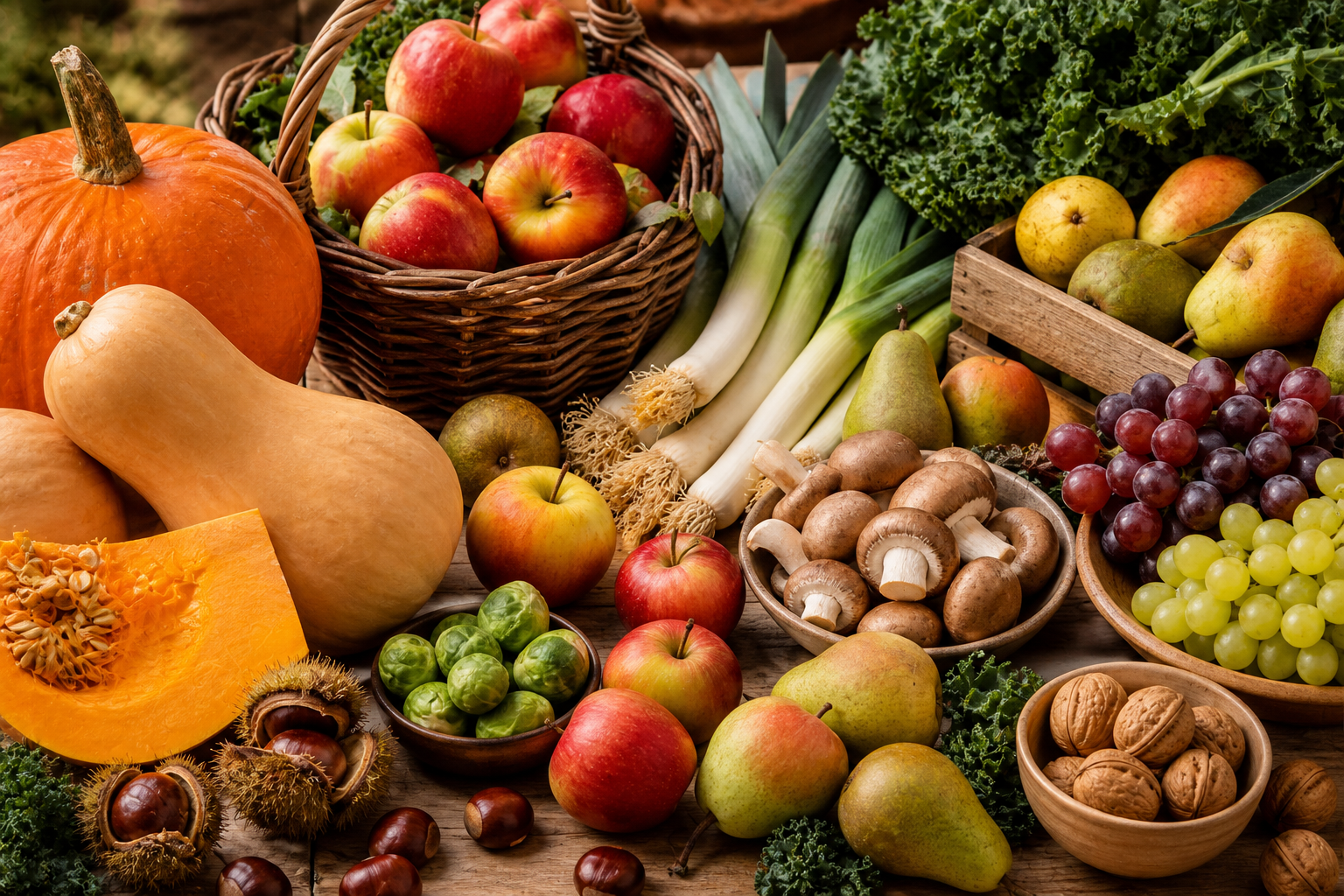
Autumn arrives gently: squash, mushrooms, leeks, cabbages, apples, pears, grapes, chestnuts. Soups and oven dishes come back into service, and it is a joy.
Winter is richer than people think: carrots, cabbages of all kinds, endives, leeks, celery, citrus from the Mediterranean basin, storage apples. The season of gratins, one-pot dishes and meal soups.
The trick to never getting it wrong: look at the prices. The seasonal product is almost always the cheapest on the stall, and it rarely comes from far away.
Getting started without thinking: three reflexes
- Build menus from the vegetables, not the other way round. Rather than choosing a dish and buying its ingredients at any price, start from what the season offers and pick recipes accordingly.
- Embrace creative repetition. In season, the same vegetable comes back for several weeks. It is the opportunity to vary it: squash as soup, roasted, in a gratin, in a curry. Constraint feeds creativity far more than it restricts it.
- Complement with frozen and canned. Eating seasonally does not mean giving up peas in November: frozen at peak season, they are often better than "fresh" ones out of season.
The planning boost
The main obstacle to seasonal cooking is a lack of ideas: everyone knows ten tomato recipes, but what do you do with a celeriac or a bunch of chard?
This is where a planning tool earns its keep. GustoPlan composes menus that follow the seasons: suggested recipes highlight the products of the moment, and the shopping list naturally steers you towards the most interesting stalls of the month. Seasonal cooking becomes the default path, with no research effort.
Conclusion
Eating seasonally is not one more discipline to impose on yourself. It is a discreet shift of perspective: start from what nature offers right now, and let the prices confirm the choice.
The reward: meals with more taste, a lighter grocery budget, a smaller footprint, and that little calendar pleasure: the first asparagus in April, the first squash in October.
Want menus that follow the seasons without thinking about it?
GustoPlan composes your weekly menus with the products of the moment, according to your tastes and budget, shopping list included.