Fresh vegetable prices: how to protect your family budget
Fresh vegetables went up sharply in August 2026, especially salad leaves, tomatoes and courgettes. The smart move is to buy them when the timing is right and to fill the gaps with frozen or tinned produce whenever those are easier to portion or less likely to go to waste.
Here is a simple method to keep vegetables on the plate without letting the fresh produce aisle decide the week's budget on its own.
What the latest Insee figures show
The final consumer price index results, published on 15 September by Insee (France's national statistics institute), confirm that food prices rose by 1.1 % year on year in August 2026. The increase reached 5.9 % for fresh produce, compared with just 0.4 % for the rest of food.
The gap is even wider for some vegetables:
- leaf and stem vegetables, including salad leaves and chicory, are up 21.3 % year on year;
- fresh fruiting vegetables, such as tomatoes and courgettes, are up 22.3 %;
- over the month of August alone, fresh produce as a whole rose by 2.9 %.
Insee links these changes in particular to the heatwaves. That does not mean every food item is going up at the same rate. Over a year, the price of bread and cereals fell by 0.3 %, oils and fats by 1.3 %, while milk, dairy products and eggs rose by only 0.2 %.
That contrast matters: rather than lowering the overall quality of meals, a family can rebalance its basket across food categories and storage formats.
Should you buy fewer vegetables when prices rise?
It is understandable to cut back on something that has suddenly become expensive. But that should not mean dropping vegetables from meals altogether.
France's national Manger Bouger programme (the government's healthy eating and activity campaign) recommends at least five portions of fruit and vegetables a day for adults. A portion is usually 80 to 100 grams. For children aged 4 to 6, it is roughly half an adult portion, then it increases gradually between the ages of 7 and 11.
These guidelines do not mean you need to buy five different fresh products every day. Vegetables can go into a soup, a gratin, a sauce, an omelette or a slow-cooked dish. Above all, they can be eaten fresh, frozen or tinned.
The French Ministry of Agriculture points out that fruit and vegetables keep their nutrients in all these forms. So the choice can depend on price, the recipe, the time you have and how much the family will actually get through.
Fresh, frozen or tinned: which format to choose?
Fresh for flavour, raw dishes and good deals
Fresh vegetables are still worth buying when they are in season, reasonably priced and going to be eaten quickly. They are especially well suited to raw salads, side salads and recipes where texture plays a central role.
There is no point, however, in sticking with a vegetable that has become very expensive. If tomatoes are beyond your budget, a salad of grated carrots, shredded cabbage or beetroot can play the same role in the meal. The recipe changes, but the overall balance holds up.
Favour fresh vegetables you have already planned several uses for. Carrots can be served raw, roasted, then added to a soup. A cabbage can go alongside a main dish, fill wraps and finish up in a stir-fry.
Frozen for portioning without waste
Plain frozen vegetables let you take out just the amount you need and put the rest back in the freezer. They are handy for small households, unpredictable weeks or vegetables the family eats in small portions.
Spinach, green beans, broccoli, peas, plain stir-fry mixes or soup mixes can quickly round out a dish. To compare fairly, check the ingredients list: a bag of plain vegetables cannot be compared directly with a ready-made mix containing sauce, salt or fat.
Frozen vegetables also spare you from throwing away inedible parts and reduce the risk of finding a vegetable going soft at the back of the fridge. Their price per kilo should therefore be weighed against the amount you actually use.
Tinned as a permanent backup
Tins are useful for cooked recipes and improvised meals: chopped tomatoes, green beans, peas, mushrooms, sweetcorn, beetroot or pulses can sit in the cupboard for months.
Compare the price per drained net weight when it is shown. Also check for added salt or sugar. For some products, draining and then rinsing removes part of the preserving liquid.
Once opened, a tin should be transferred to a suitable container, kept in the fridge and eaten quickly, following the manufacturer's instructions.
The real price is the price of what you eat
A fresh vegetable with an attractive price tag is not good value if a third of it ends up in the bin. Conversely, a bag of frozen vegetables that costs slightly more per kilo can work out cheaper per plate if all of it is used.
Before choosing, ask yourself four questions:
- How much will actually be eaten?
- How many meals will use this product?
- Will part of it need to be peeled or thrown away?
- Will it keep until the meal it is planned for?
This way of thinking stops you from confusing the shelf price with real savings. It also means you only buy larger packs when the menu plans to use them up completely.
A flexible shopping base for one week
Rather than sticking to a single format, you can plan three tiers of vegetables:
- three versatile fresh vegetables, chosen according to the prices you see;
- two bags of plain frozen vegetables, for busy days or side dishes;
- two or three tins, for sauces and backup meals.
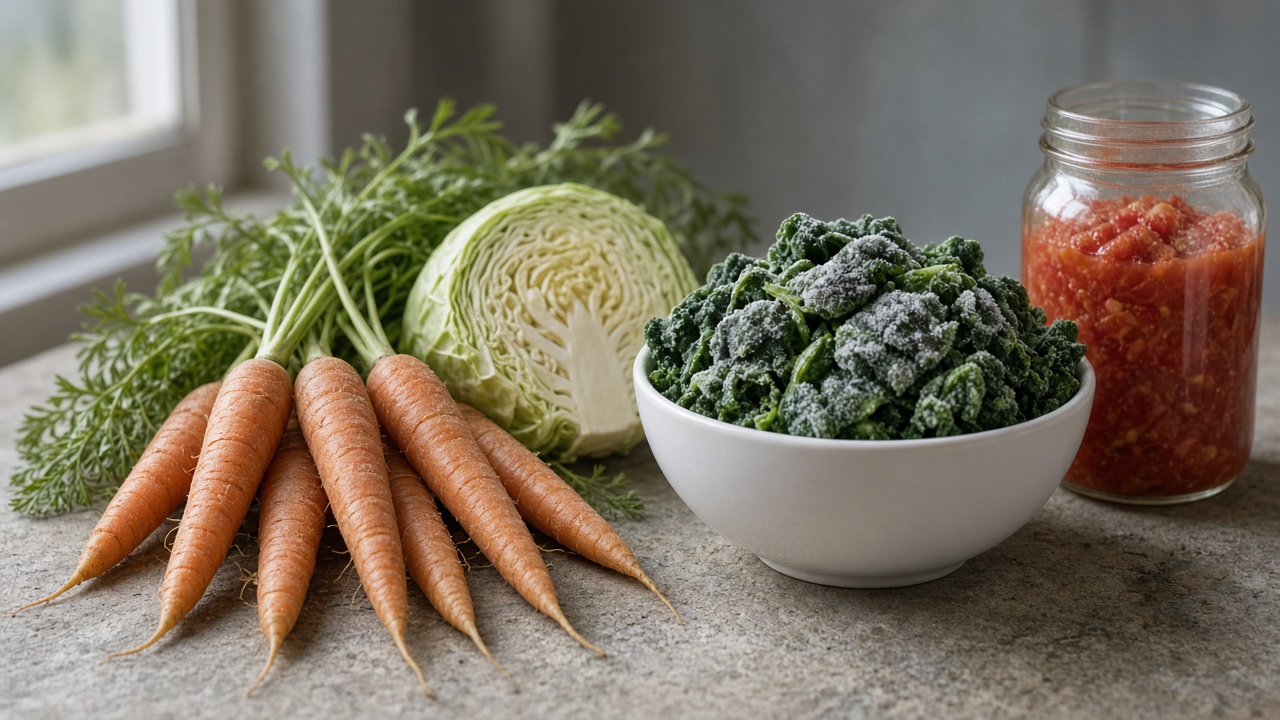
For example, a basket of carrots, cabbage and squash, frozen spinach and green beans, plus tinned chopped tomatoes and chickpeas lets you put together several meals without relying on fresh tomatoes or courgettes.
Example: five dinners using several formats
| Day | Dinner | Vegetables used |
|---|---|---|
| Monday | Omelette, grated carrots and wholemeal bread | Fresh carrots |
| Tuesday | Chicken, potatoes and green beans | Frozen green beans |
| Wednesday | Pasta with tomato and lentil sauce | Tinned tomatoes |
| Thursday | Chickpea, squash and spinach curry | Fresh squash, frozen spinach, tinned chickpeas |
| Friday | End-of-week soup with open sandwiches | Leftover carrots, cabbage and squash |
This menu does not pit fresh against processed. Each format has a job: fresh brings texture and versatility, frozen makes portioning easy, and tinned secures the meals planned for later in the week.
Five swaps when the fresh aisle gets too expensive
When the price of a product shoots up, you can often keep the recipe, or at least what it does in the meal:
- swap fresh tomatoes for chopped tinned tomatoes in sauces, curries and slow-cooked dishes;
- swap a green salad for grated carrots, shredded cabbage or beetroot;
- use frozen spinach in a quiche, an omelette or a gratin;
- choose a plain frozen vegetable mix rather than several fresh vegetables that risk being left half-used;
- bulk out a small amount of vegetables with lentils, beans or chickpeas for a more filling dish.
A successful swap does not have to reproduce the original dish exactly. Above all, it should keep the recipe enjoyable, balanced and suited to the family's tastes.
How GustoPlan helps you adjust your basket
When prices swing sharply from one week to the next, a completely fixed menu becomes hard to stick to. GustoPlan starts from recipes suited to your household's profile, then leaves you in control of the ingredients that go into your basket.
You can replace a fresh vegetable that has become too expensive with a frozen or tinned alternative while keeping quantities consistent. The shopping list brings together what you actually need and sorts it by aisle, which makes it easier to compare fresh, tinned and frozen options in store.
The best protection against short-term price spikes is not giving up vegetables. It is having a menu structured enough to avoid unnecessary purchases and flexible enough to choose the right format at the right time.
With GustoPlan, that flexibility is built in from the moment you plan the week: quantities match your household, ingredients are shared across several meals and every item you buy already has a purpose.
Sources
- Insee: Consumer price index, final results, August 2026
- Manger Bouger: Fruit and vegetable recommendations
- French Ministry of Agriculture: Fruit and vegetables in fresh, frozen and tinned forms