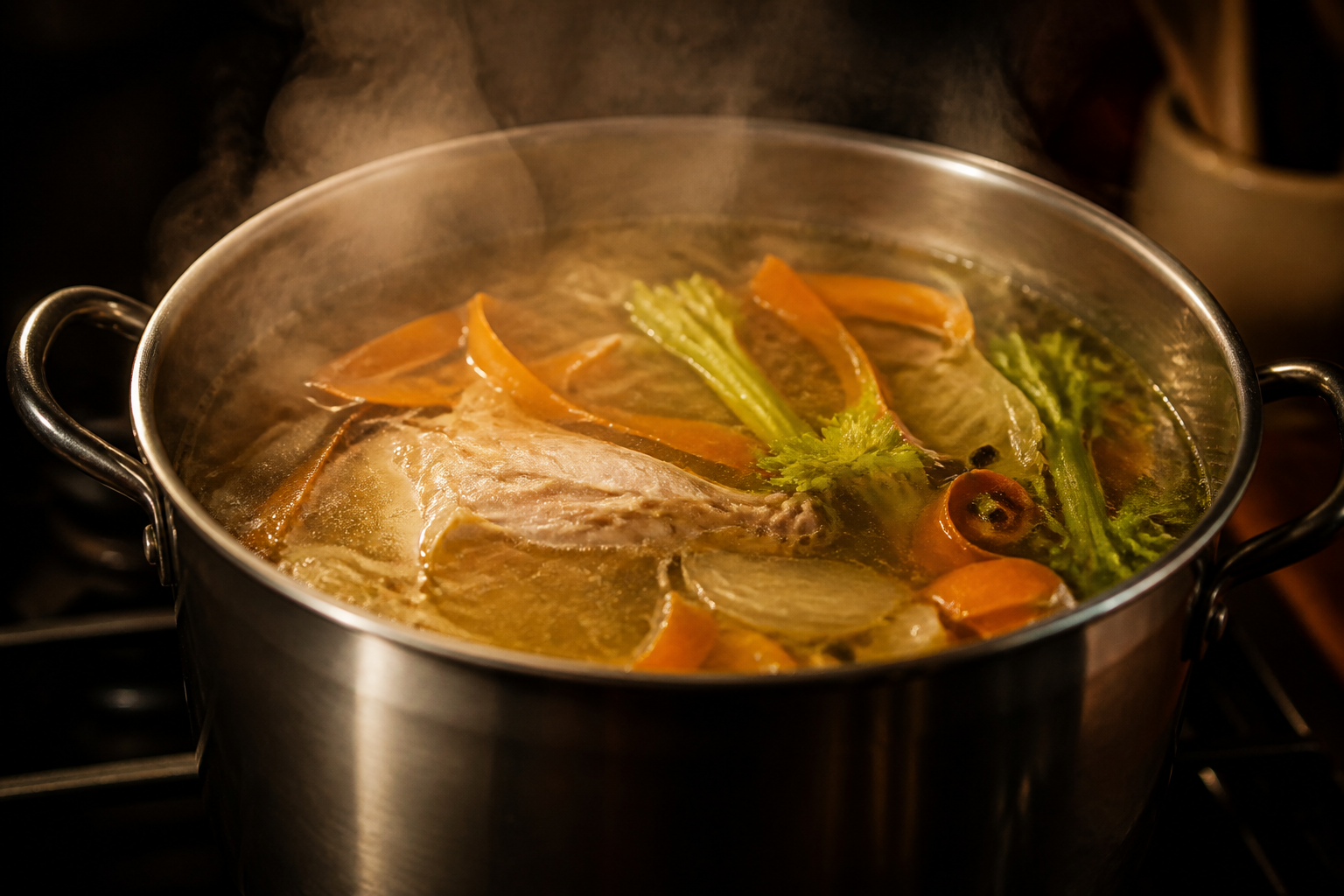
Homemade broth: saving carcasses and peels all week long
Every evening, a little more trash piles up without us noticing: the carcass from a roast chicken, onion skins, mushroom stems, carrot tops, the greener ends of a leek. On their own, they look useless. Together, over a week, they become homemade broth worthy of a restaurant pot: flavour, minerals, no cube, and almost nothing thrown away.
The idea is simple. You collect scraps in the freezer, simmer once, then portion. Nothing military: one bag, one pot, and the reflex to stop throwing away what still has potential.
The freezer “broth bag”
Keep a large freezer bag (or an airtight box) just for this. As soon as cooking produces clean trimmings, they go in straight away.
What belongs in the bag:
- carcasses and bones: roast chicken, leftover roast pork or beef bones, poultry frames after butchering;
- vegetable peels: carrots (including a few clean tops), leeks (the green parts), onions and shallots (skins included: they colour the broth), celery, parsnip;
- aromatic trimmings: mushroom stems, parsley stalks, thyme sprigs, a little rosemary, a bay leaf;
- useful leftovers: a soft tomato, a piece of courgette, mushrooms that look tired but are still sound.
What to avoid (or use sparingly):
- bitter or strong vegetables in large amounts: broccoli, cabbage, cauliflower, turnip (they can make the broth harsh);
- too much potato: it clouds the broth;
- spoiled or mouldy food, or anything already very salty;
- fish bones in the same bag as poultry (better: a separate, shorter fish stock).
When the bag is nicely full (about 1 to 1.5 kg of scraps, or after 7 to 10 days), it is pot time.
The method: about 20 minutes of real work
The rest is unattended simmering.
Empty the bag into a large pot. Cover with cold water (just above the scraps).
Add what the bag often lacks: 1 chopped onion, 1 carrot, 1 celery stick if you have not already added any, pepper, 1 bay leaf, optionally 2 garlic cloves.
Bring to a gentle simmer. Skim once if needed. Let it simmer gently: 1.5 to 2 hours for a vegetable stock, 2 to 3 hours (or more) if you have bones and carcasses.
Strain. Press the vegetables lightly to recover the liquid. Season with salt at the end, to taste (or not at all: you can salt the dishes later).
Cool, then portion: ice-cube trays, 250–500 ml tubs, or flat freezer bags. Fridge 3 to 4 days; freezer for several months.
Texture tip: once cold, a poultry broth often sets into a jelly. That is a good sign: collagen and body, not watery stock.
What can you do with this broth?
This is where the habit pays off. A litre of homemade broth replaces the cube and improves almost anything that simmers.
- soups and veloutés: use it instead of water;
- rice, quinoa, bulgur, pasta: cook in broth for clean flavour without a heavy sauce;
- risottos and one-pots;
- sauces and meat juices: deglazing the pan, reductions;
- braised vegetables: carrots, leeks, fennel;
- quick Asian noodles: broth + soy sauce + an egg + leftover vegetables;
- mash and gratins: a ladleful to bind without cream;
- a simple drink: a hot mug with lemon and ginger when you want comfort without a snack.
Vegetable-only version: the same bag without bones, peels and trimmings only. Clearer, lighter, ideal for meat-free weeks.
Why it is healthier (and often better) than cubes
Industrial cubes and stocks have one real advantage: speed. On everything else, homemade usually wins.
- You control the salt. Many cubes are very salty; homemade is salted at the end, or not at all.
- Fewer additives. Depending on the brand: flavour enhancers, hydrogenated oils, colourings, aromas. Your pot does not need them.
- Real flavour from the food you ate during the week, not a generic “chicken” profile.
- Less waste, fewer purchases. The trimmings were already paid for. The cube is an extra line on the receipt.
- Collagen and body (with bones and carcasses): a stock that gels, useful in cooking and as comfort food.
This is not anti-industry ideology: it is common sense. A cube remains useful in a pinch. But once the freezer bag exists, the cube becomes the exception, not the rule.
A weekly rhythm, without mental load
Monday to Thursday: fill the bag without thinking.
Friday evening or Sunday: one pot while you do something else.
The following weekend: portions ready for soups, rice and sauces.
The habit works even better when the week’s meals are lightly planned: the more vegetables and poultry you cook, the more the bag fills itself. The less you default to “bin it all”, the more broth becomes automatic.
Conclusion
Carcasses, peels, stalks and skins are not waste: they are deferred ingredients. One freezer bag, a quiet simmer, cold portions: you leave the cube logic behind, throw less away, and your dishes gain depth without extra evening effort.
Want less waste in your weekly menus for real?
GustoPlan builds the menu around your tastes and budget, and generates a shopping list that buys just enough: what you need, without surplus.