Reducing food waste: 7 simple habits that change everything
A lettuce forgotten at the bottom of the vegetable drawer. A yogurt three days past its date. Leftover gratin that sat out one evening too many.
At household level, these little nothings add up to around thirty kilos of food thrown away per person per year, much of it still perfectly edible. That is money in the bin, shopping time wasted, and a real environmental cost.
The good news: reducing waste requires neither deprivation nor military discipline. Seven habits are enough to make a visible difference within the first month.
1. Plan meals before going shopping
Food waste almost always starts at the store, not in the kitchen. We shop without a plan, pile up fresh products "just in case", and part of it never gets cooked.
Deciding the week's meals before heading to the shops means buying exactly what will be eaten. It is the most effective habit on this list: all the others follow from it.
2. Take stock before writing the list
Before adding anything to the shopping list, take a look at the fridge, the freezer and the cupboards. Two simple questions:
- What needs to be eaten first?
- What do I already have that I might buy again by mistake?
Building the first meals of the week around what is already there saves that much food, and that much money.
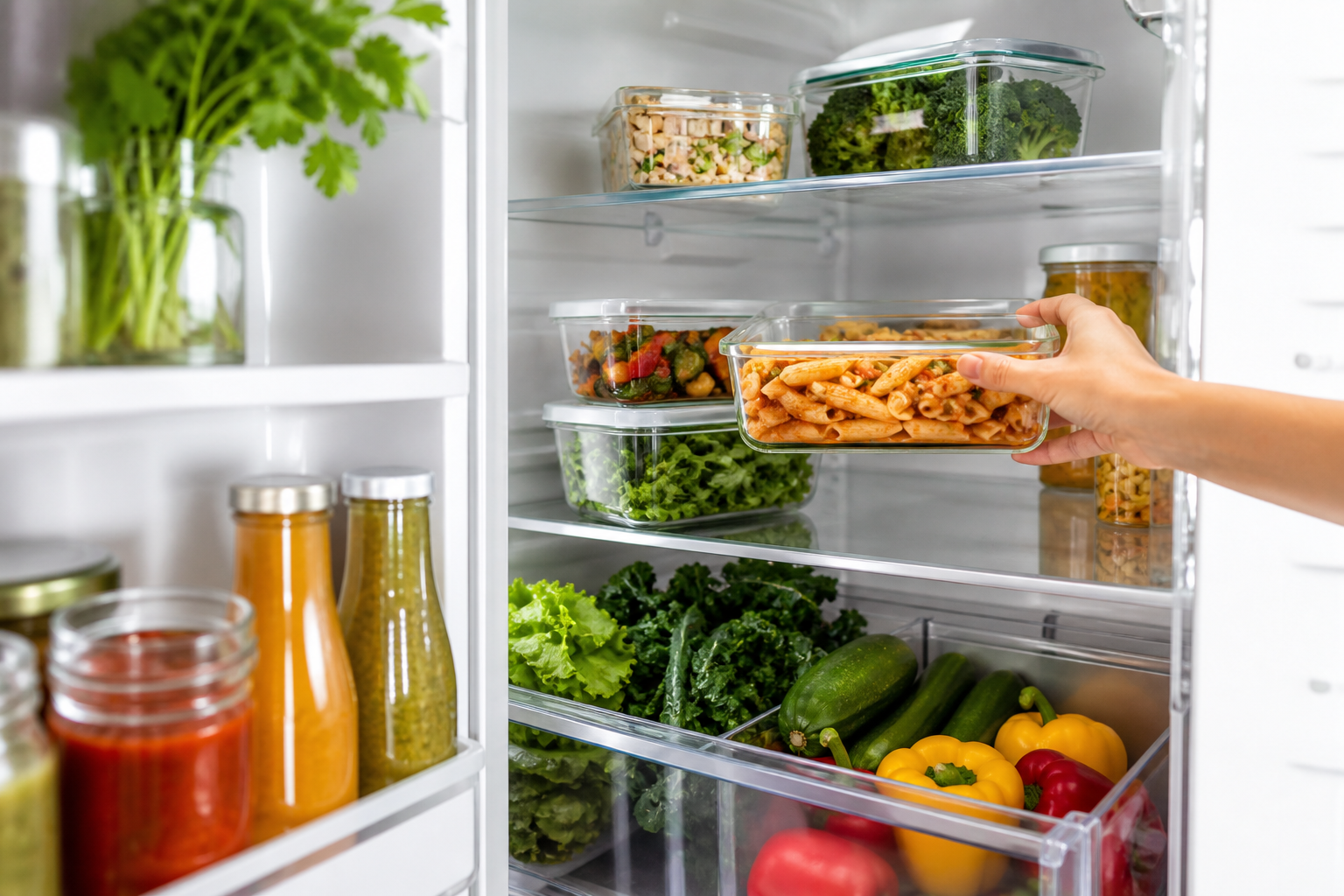
3. Organise your fridge like a pro
A well-organised fridge is one where nothing hides. Three reflexes:
- Urgent items at the front: products to eat soon stay visible, at eye level.
- The right zone for the right product: the cold zone (bottom shelf) for meat and fish, the drawer for vegetables, the door for the least fragile items.
- Visible leftovers: in transparent containers, never in a saucepan covered with a plate.
4. Treat leftovers as ingredients
A leftover is not a failed meal, it is an ingredient that is already cooked. A few reliable classics:
- cooked rice becomes fried rice with vegetables,
- roasted vegetables go into an omelette, a quiche or a soup,
- leftover chicken becomes a wrap, a salad or a broth,
- stale bread ends up as croutons, French toast or breadcrumbs.
Planning one "leftovers" meal per week, on Thursday or Friday evening, empties the fridge right before the next shop.
5. Understand expiry dates
A lot of food is thrown away perfectly edible because of confusion between two labels:
- "Use by": a genuine safety limit, to be respected. Meat, fish, fresh products.
- "Best before": a simple guarantee of optimal quality. Pasta, rice, canned goods, chocolate and unopened yogurts often remain very good well past the date.
For "best before" products: look, smell, taste. Your senses are far better judges than a printed date.
6. Freeze before it is too late
The freezer is the best anti-waste ally, provided you use it before the product declines. Weekend bread gets sliced and frozen on Monday. Meat bought on promotion goes into the freezer the same day. Overripe fruit gets frozen in chunks for compotes and smoothies.
Here too, a label with contents and date saves you from discovering mystery blocks six months later.
7. Adjust cooking quantities
If plate scrapings and dish leftovers regularly end up in the bin, the quantities you cook are too large. Weighing starches before cooking (60 to 80 g of pasta or rice per adult as a side) and noting the proportions of dishes that "come out just right" lets you adjust once and for all.
Conclusion
Reducing food waste is not about feeling guilty over every peel. It is about setting up a small system: planned meals, shopping that starts from an inventory, a readable fridge, leftovers that get cooked and a freezer used at the right moment.
The results show quickly: less rubbish, cheaper shopping, and that quiet satisfaction of ending the week with an almost empty fridge, without having thrown anything away.
Want to plan your meals without spending your evenings on it?
GustoPlan builds your weekly menu around your tastes and budget, and generates a shopping list that buys just right: what you need, nothing more.