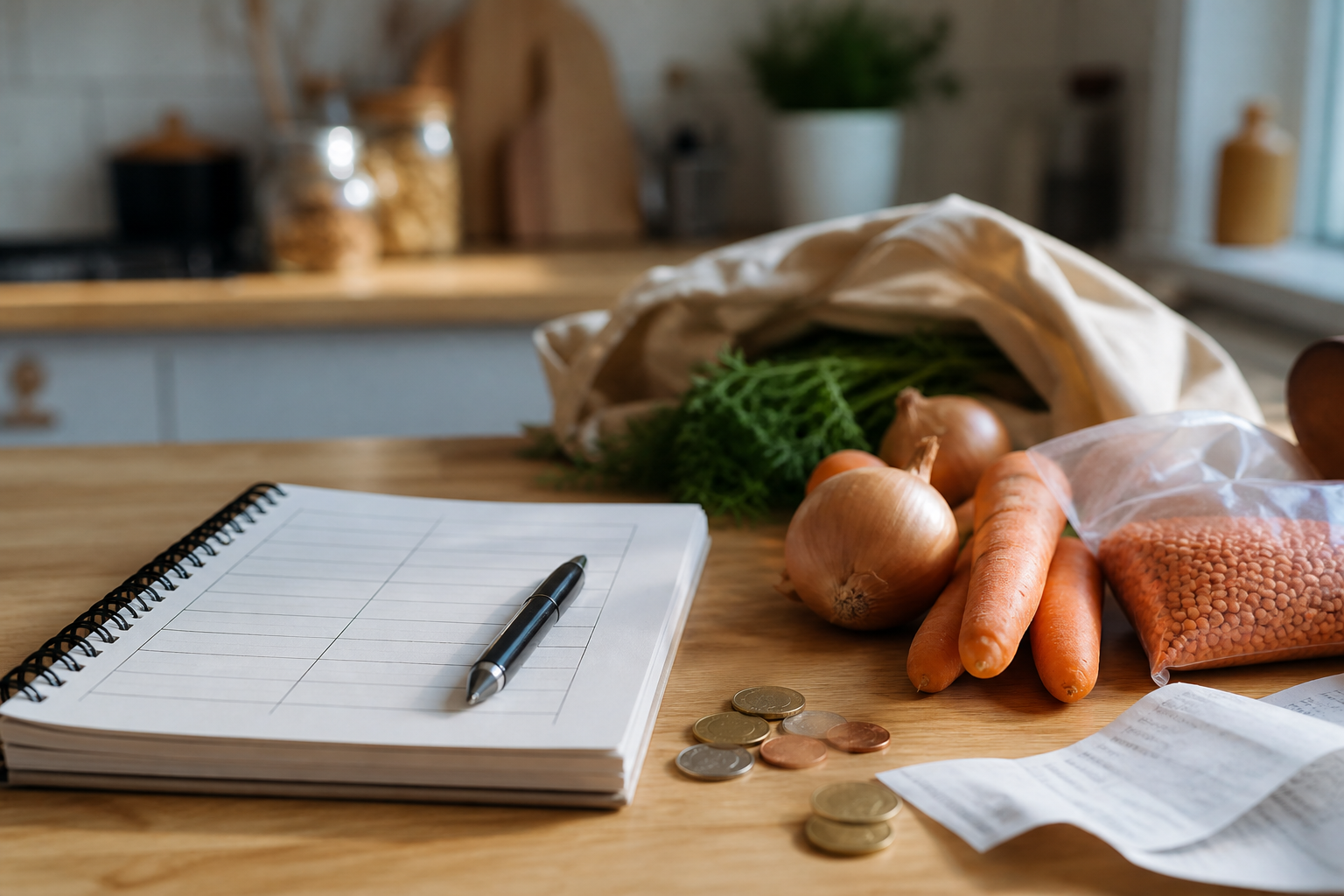
Rising food prices: how to adapt your menus for back-to-school 2026
Global food commodity prices rose sharply in August 2026. Cereals, oils, sugar, meat and dairy: no major category was spared. Should French shoppers expect an immediate spike at the till? Not necessarily. But the signal is a reminder to plan meals, compare products and keep enough flexibility in the weekly menu.
Global food prices are climbing again
On 4 September 2026, the UN Food and Agriculture Organization (FAO) released its latest Food Price Index.
In August it reached 133.3 points, up 1.9% month on month and 2.5% year on year. That is the highest level since late 2022, while still nearly 17% below the peak of March 2022.
Every major product group tracked by the FAO rose:
- cereals: +2.2% over the month;
- dairy: +2.3%;
- meat: +1%;
- vegetable oils: +0.6%;
- sugar: +11.9%.
Several pressures stack up: hot, dry weather in some producing regions, harvest worries, Black Sea trade tensions, and disruptions to fertiliser and international transport. The FAO also stresses that trends differ widely by product.
A global rise is not an instant supermarket spike
The FAO index tracks internationally traded food commodities. It does not directly measure the price of a pasta pack, a litre of milk or chicken in a French supermarket.
Between world prices and the till come, among other things:
- contracts between producers, processors and retailers;
- processing and packaging costs;
- energy and transport;
- promotions and retail margins;
- French vs imported origin;
- the lag before new market conditions show up on shelves.
A global rise can be absorbed, delayed or limited to some SKUs. Conversely, a product can rise in France for reasons unrelated to its world price.
The right reflex is not to panic-fill cupboards, but to watch the prices of what your household actually eats.
What do prices look like in France?
French data currently paint a milder picture.
According to Insee’s provisional estimate published on 28 August, food prices rose 1.1% year on year in August 2026. That average hides a clear split:
- +5.8% for fresh products;
- +0.5% for other food products.
Insee notes that these figures remain provisional, with final results due on 15 September.
Separately, UFC-Que Choisir reports a 1.6% rise over the year and 0.2% over the month on its food basket, based on daily prices from 4,800 stores with click-and-collect and a basket of 1,181 products.
The numbers differ because methods and products differ. They still point the same way: there is no uniform food price explosion right now, but pressures are returning and some aisles move much faster than others.
As an illustration, a 1.1% average rise would mean €1.65 on a €150 weekly shop with the same composition. A family’s real budget can move far more if they buy mostly the categories rising fastest.
How to protect the budget without unbalancing meals
1. Plan menus before you enter the store
The best saving is not always the cheapest product. It starts by avoiding unused buys, single-use ingredients and food that ends up in the bin.
Before shopping, it helps to decide:
- exactly how many meals you will cook;
- which days will be short on time;
- what is already in the fridge;
- which ingredients can serve in several dishes;
- one meal dedicated to leftovers.
A bunch of carrots can, for example, go with chicken, enrich a pasta sauce, then finish in a soup. The goal is not to eat the same dish three times, but to give each purchase several uses. On the same idea, carcasses and peels can feed a homemade broth instead of the bin.
2. Build flexible menus
When prices are unstable, a rigid plan can backfire. It is better to plan the role of an ingredient than its exact SKU.
You can write:
- “cheapest seasonal vegetable”;
- “fish depending on promotion”;
- “fruit for snacks”;
- “plant protein”;
- “hard cheese or a cheaper alternative”.
That flexibility lets you take a useful promotion without rewriting the whole week. If courgettes become too expensive, swap in carrots, cauliflower or a plain frozen mix depending on the recipe.
3. Compare the price of what you actually eat
Price per kilo remains the best in-store guide, but it is not always enough.
A cheaper product can be worse value if it creates a lot of waste, keeps poorly or forces a pack that is too large. Plain frozen vegetables can be good value: they are prepped, easy to portion and cut waste.
Also beware of multi-buy deals on volumes the household will not finish. Three for the price of two only saves money if all three are used. To cut waste after shopping, see our 7 simple food-waste habits.
4. Keep a few economical backup meals
A family menu can include two or three simple, filling, modular dishes each week:
- lentil and vegetable dhal;
- omelette with potatoes and raw vegetables;
- pasta with a tomato sauce enriched with lentils;
- fried rice with vegetables and leftover chicken;
- a complete soup with toast;
- chilli without meat, or with a small amount of meat.
These should not feel like second-class meals. Well seasoned and properly composed, they add variety while reducing reliance on the costliest ingredients.
Sample adaptable family menu for five evenings
Here is a sample week that deliberately shares one animal protein, anchors two very economical evenings, and keeps substitutions visible.
Monday — Oven chicken (thighs or whole bird depending on €/kg) + seasonal vegetables + starch
Pick the cheapest cut per kilo. Keep the carcass for broth. If chicken is above your budget threshold, switch Monday to a dhal or chilli.
Tuesday — Lentil “bolognese” pasta
Fold Monday’s leftover vegetables into the sauce. Swap: red beans or chickpeas if lentils are missing.
Wednesday — Omelette + potatoes + raw salad or the cheapest vegetable
Budget anchor evening: no meat dependency, protein from eggs.
Thursday — Fried rice with leftover chicken + vegetables (fresh or plain frozen)
Closes Monday’s loop without buying more meat.
Friday — Complete soup (vegetables + legumes or leftovers) + toast
Or meat-free chilli / chilli with a little mince on promotion. More “back-to-school budget” than homemade pizza, unless flour and cheese are already open.
In one line: if chicken is too expensive this week, start with dhal or chilli, and keep eggs and lentils as your safety net.
Mistakes to avoid when prices make headlines
The first mistake is systematically cutting fruit, vegetables or protein in favour of items that are merely cheaper but not filling.
The second is stockpiling flour, oil or sugar because world markets moved. There is no guarantee the same rise will hit shelves in the same proportions.
Finally, switching stores to save a few cents can cost more if it adds travel, unplanned buys or extra small trips.
The goal is not to track every price tick, but to have a system robust enough to adapt.
Planning is mainly about taking back control
Rising global food prices are a vigilance signal, not a reason for alarmism. For families, the most effective strategy stays very concrete: know your budget, plan meals, share ingredients across dishes, and plan substitutions.
That is exactly what a tool like GustoPlan is for: build a coherent, modular week of meals, know what will actually go in the basket, and swap an ingredient that became too expensive without starting over. Fewer forgotten fridge leftovers, more control when aisles move.
When prices change, a good menu is not the one that stays frozen. It is the one that can evolve without blowing the budget or turning family dinners into a chore.
Sources
- FAO — Food Price Index (released 4 September 2026)
- Insee — Provisional consumer price estimate (August 2026, published 28 August)
- UFC-Que Choisir — Food price barometer (August 2026)
- Reuters — Analysis of global food supply tensions, 4 September 2026