Cheap protein: 7 family meals on a tight budget
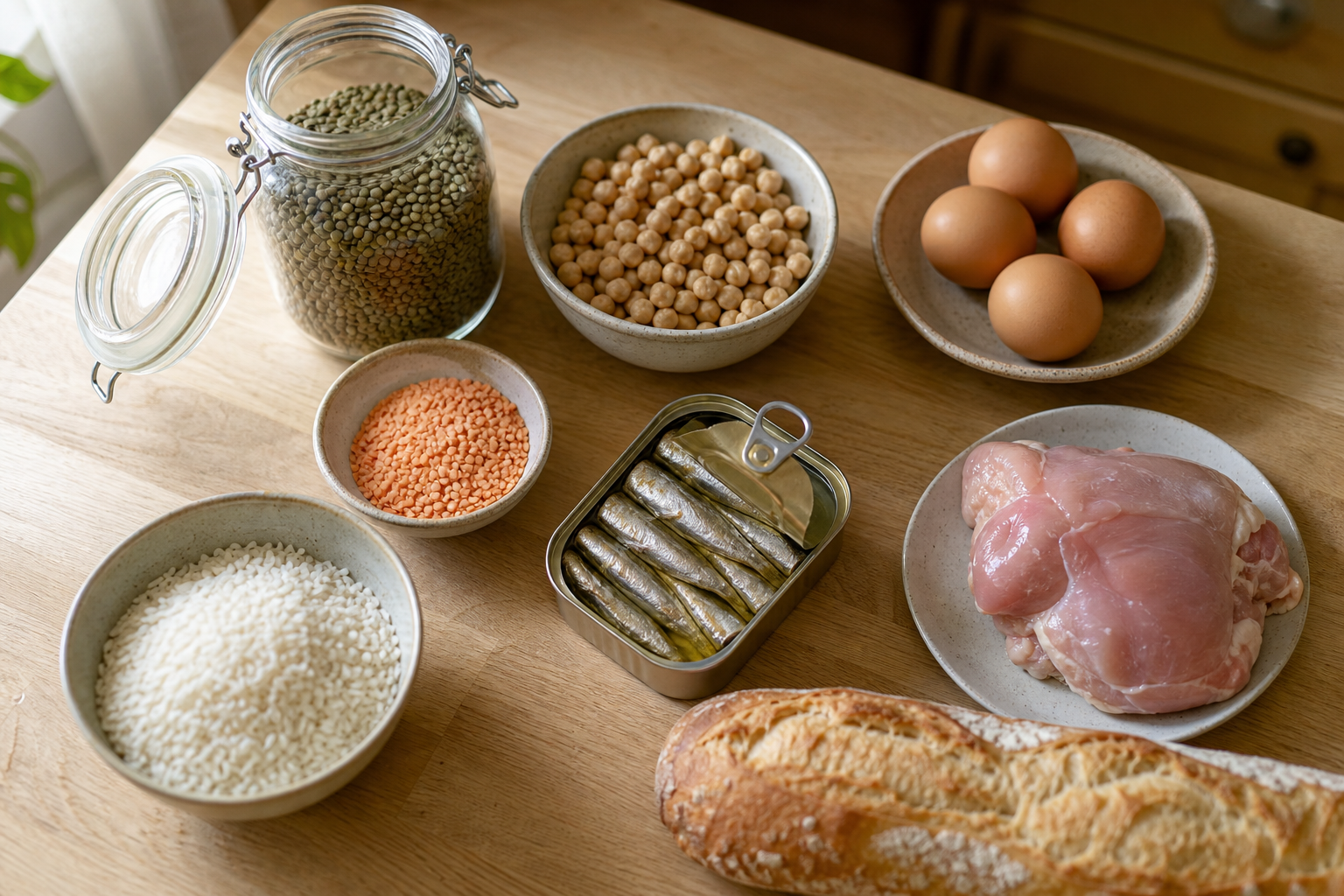
Lentils, eggs, chickpeas, sardines, chicken: there is no shortage of protein sources, but they do not weigh the same at the checkout. Keeping meals balanced without buying meat every evening is not about hunting down the cheapest cut. It is about varying the sources and organising how they are used across the whole week.
Here is a simple method, plus seven dinner ideas that fill up a family without wrecking the grocery bill.
In France, one person in ten has gone without protein for financial reasons
On 24 September 2026, France's Commissariat général au développement durable brings together local authorities, charities and food-sector organisations around one question: how to make sustainable food genuinely affordable.
The figure behind the meeting comes from Insee, the national statistics institute. In 2024, 10 % of the population of metropolitan France living in ordinary households went without protein for financial reasons. The share was 12.3 % in 2023, but only 6.3 % in 2021.
In other words, the improvement between 2023 and 2024 is real, yet the level remains well above what it was before the surge in food prices. The indicator does not say that everyone concerned is deficient: it measures an economic decision to give up certain foods.
For a family, then, the answer is not only the price of meat. It is also the variety of protein sources, and what actually happens to each item you buy.
Five sources to rotate through the week
Pulses, for one-dish meals. Green, blond or red lentils, chickpeas, split peas, white, red or black beans, broad beans: French public health guidance recommends eating them at least twice a week, because they are naturally rich in fibre, which fills you up. Red lentils cook in minutes in a soup, a curry or a pasta sauce. Pair them with a starch, ideally wholegrain: lentils and rice, chickpeas and couscous, red beans and sweetcorn, mashed white beans on bread. Dried pulses are cheaper in quantity, tinned ones save you from ordering takeaway on a rushed evening: the right choice depends as much on the time you have as on the price tag.
Eggs, for backup dinners. An omelette, baked eggs, a crustless quiche, an egg on top of fried rice: a few eggs turn vegetables and a starch into a complete meal. You can buy exactly the quantity you want, and they wait without demanding any other special ingredient.
Tinned fish, for the cupboard. Sardines, mackerel and tuna work in a potato salad, on toast, with pasta or rice. Compare the price per kilo and the drained weight, then the amount you actually need: a small tin finished off often costs less than a large one opened and forgotten.
Poultry and meat, for some meals. Eating them less often does not mean cutting them out. A portion of chicken goes a long way in a couscous, a stir-fry or a pasta dish loaded with vegetables, rather than served alone in a large helping. Leftovers then become a sandwich, a salad or fried rice: the purchase pays for itself without serving the same dinner twice.
Dairy, as a complement. Plain yoghurt, fromage blanc, a little grated cheese on a gratin of pulses and starch: they round out the meal without having to become its main ingredient.
Seven family dinners, one shopping list
- Monday: red bean chilli with tomatoes and rice.
- Tuesday: potato and seasonal vegetable omelette.
- Wednesday: pasta with lentil bolognese.
- Thursday: sardines, potatoes and cabbage salad.
- Friday: chickpea and vegetable curry with rice.
- Saturday: chicken, couscous and roasted vegetables.
- Sunday: vegetable soup with white bean toasts.
Each dinner links to its recipe, with quantities, method and cost per serving : they range from 0.93 to 2.32 euros.
This week does not require seven different protein purchases. The same tin of tomatoes serves the chilli and the lentil sauce, rice goes with two meals, and the half-used vegetables end up in Sunday's soup. Quantities, of course, follow the ages of the children and the number of people at the table.
Four habits that lower the bill without unbalancing meals
Choose the protein before anything else. When you plan the menu, give each dinner its main source: pulses, eggs, fish or meat. That overview stops you from penciling in five meat meals out of habit, then trying to claw the total back in the shop. It also shows you, before the shopping list exists, whether the week is varied.
Compare the cost of what you will actually eat. Price per kilo is not enough: count the bones, the skin and the brine, the amount each recipe needs, the risk of wasting part of it, and how many meals the purchase will cover. A large pack is only cheap if all of it is eaten or properly frozen.
Keep two quick options in the cupboard. Two meals you can cook with no particular fresh ingredient: red lentils and rice, pasta with sardines, an omelette, chickpeas in tomato sauce. Those reserves prevent top-up shopping trips and last-minute deliveries, almost always dearer than a dinner made from what is already there.
Introduce pulses gradually. A full plate of lentils can put a child off. Start with familiar recipes: replace part of the minced meat with lentils in a bolognese, add chickpeas to a couscous, blend white beans into a soup. A small portion that gets eaten beats a large, cheap dish that stays untouched.
With GustoPlan, every purchase has a purpose
Managing a protein budget does not mean counting grams. It means deciding in advance which foods will be used, in which recipes, and in what quantities.
GustoPlan builds menus around your household, its tastes and its dietary constraints, then gathers the ingredients into a coherent shopping list: the same tin, the same packet, the same vegetable can serve several meals.
That is what makes trade-offs easy. If the meat you planned goes over budget, it can be swapped for eggs or pulses without disrupting the week: quantities stay right, and every item you buy has somewhere to go.
Varying your proteins then becomes a habit rather than an effort: fewer decisions made under pressure, fewer forgotten leftovers, and more meals the whole family can afford.